To turn years of health notes into something a doctor can use, write one page that leads with your main concern, then gives a short dated timeline, what you've tried and how it went, your medicines and supplements, and your three most important questions. Keep your full notes behind it in case the doctor wants detail.
If you've been writing things down for a long time, you already have the hard part. The problem is that a notebook, a notes app, or a folder of lab PDFs is written for you, in the order things happened. A doctor needs the same facts in the order that answers their questions.
Why one page
The National Institute on Aging's advice is to "be clear and concise when describing your symptoms" (NIA), and to put your questions in order and ask the most important ones first (NIA). A page you can hand over does both. It also means you won't spend the visit scrolling for the one detail that matters.
Step by step
- Gather everything in one place. Your notes, any lab results, past visit summaries, and a list of every medicine and supplement you take. AHRQ suggests bringing "all the medicines you take" to the appointment, because doses are easy to misremember (AHRQ).
- Lead with your main concern. Write it in one line, in your own words. If other things are going on too, list them briefly underneath so you and your doctor can decide what to cover.
- Build a short timeline for that concern. When it started, what was happening in your life then, and the handful of moments that changed things: a flare, a new medicine, a test, a diagnosis. Dates can be approximate, but write them down.
- Describe the pattern the way doctors ask about it. The NIA lists the questions: when it started, what time of day it happens, how long it lasts, how often, whether it's getting better or worse, and whether it stops you doing your usual things (NIA).
- List what you've tried. Each change, roughly how long you tried it, and what happened, including "no clear effect." This is often the most useful part of years of notes, and the part that's hardest to remember in the room. If you're still testing something, here's how to tell whether a change is working.
- Add what doctors routinely need. Medicines and supplements with doses, allergies and what happened when you reacted, relevant family history, and any previous test results.
- Write your top three questions, most important first.
- Date it, and keep your originals. The summary points to your notes; it doesn't replace them.
A template
| Section | What to write |
|---|---|
| Last updated | Today's date, so you both know how current it is |
| Main concern | One line, e.g. "Bloated most afternoons for about a year" |
| Timeline | Start date, and three to five dated moments that changed things |
| Pattern | How often, what time of day, how long, better or worse lately |
| Better or worse with | Foods, sleep, stress, exercise, your cycle, anything you've noticed |
| Impact | What it stops you doing or makes harder |
| Tried so far | Change, how long, what happened |
| Medicines and supplements | Names and doses |
| Allergies and family history | Allergies with the reaction you had, and family history relevant to the concern |
| Previous tests | What, when, and the result if you know it |
| Top three questions | Most important first |
For gut symptoms, the gastroenterologist version adds bowel habits and a warning-signs checklist.
Start today
Print the pages
The printable visit notes are two pages: notes written when things happen, with the date and time, and a list for the next visit that follows the template above. For medicines and doses, the medication list keeps them in one place.
Keep notes as things happen
The one page is easier when the notes behind it were written on the day. If you already use an AI assistant, this prompt sets up that habit between appointments. Check its privacy practices before you share health details.
Help me keep notes between doctor's appointments, so the next visit starts from a clear page. Help me organize, without diagnosing or suggesting treatments. If I mention a symptom that sounds urgent or is getting worse, tell me to contact a doctor now.

1. Ask who the notes are for (me, my child, or a parent I help), who we're seeing next, and when.
2. Write the main concern as one line in my words.
3. Give me a format for notes written when things happen: the date and time, the kind (symptom, medicine and dose, sleep, meal, test, change we tried, question), and what happened in my words.
4. Remind me to write down medicines with the dose and the time, and questions as they come up.
5. Each week, ask me: What changed since the last visit? What did we try, for how long, and what happened? Which question matters most now?
6. Before the appointment, help me build one page: last updated, main concern, a short dated timeline, the pattern (how often, what time of day, how long, better or worse), what we tried, medicines with doses, and the top three questions, most important first. Keep my wording, put the date next to each point, and mark anything uncertain instead of guessing.
Using an AI assistant to help
An AI assistant can be a good first pass at sorting years of notes into this template, especially if they're long or scattered. Here's a prompt you can paste in with your notes:
Turn my health notes below into a one-page summary for my doctor. Use these sections: last updated, main concern (one line), timeline (three to five dated moments), pattern, better or worse with, impact, tried so far (change, how long, what happened), medicines and supplements, allergies and family history, previous tests, and my top three questions. Next to every line, add the date and a short quote from my notes that it came from. If a date or detail is unclear, mark it as uncertain instead of guessing. Don't add anything that isn't in my notes.A few checks help you catch mistakes:
- Check the tool's privacy practices before you upload medical records, and remove identifiers it doesn't need.
- Ask it to keep the date and a short quote from your notes next to each line, so you can see where every point came from.
- Verify your current medicines and doses separately, from the bottles or your pharmacy, rather than from old notes.
- Keep uncertain dates or diagnoses labeled as uncertain.
- Read the result against your originals before you print it. A summary can drop a detail or state something more firmly than your notes did, and you're the one who'll be asked about it.
After the visit
Add the date, what the doctor said, any tests ordered, and the plan to your notes the same day, so your next summary starts from there. In the US, "you have the right to see and get copies of your health information," and if your doctor offers a patient portal, you may be able to view and download it there (HHS).
What it looks like in Kasane
Kasane is a health journal for your family. It's on the App Store for iPhone, starting with a free week: download Kasane. Kids and parents you care for each get a journal of their own, and a co-parent can write in a shared child's journal from their own phone. Here's a fictional example: Mia, 7, who's been waking at night, on the morning after a fever.
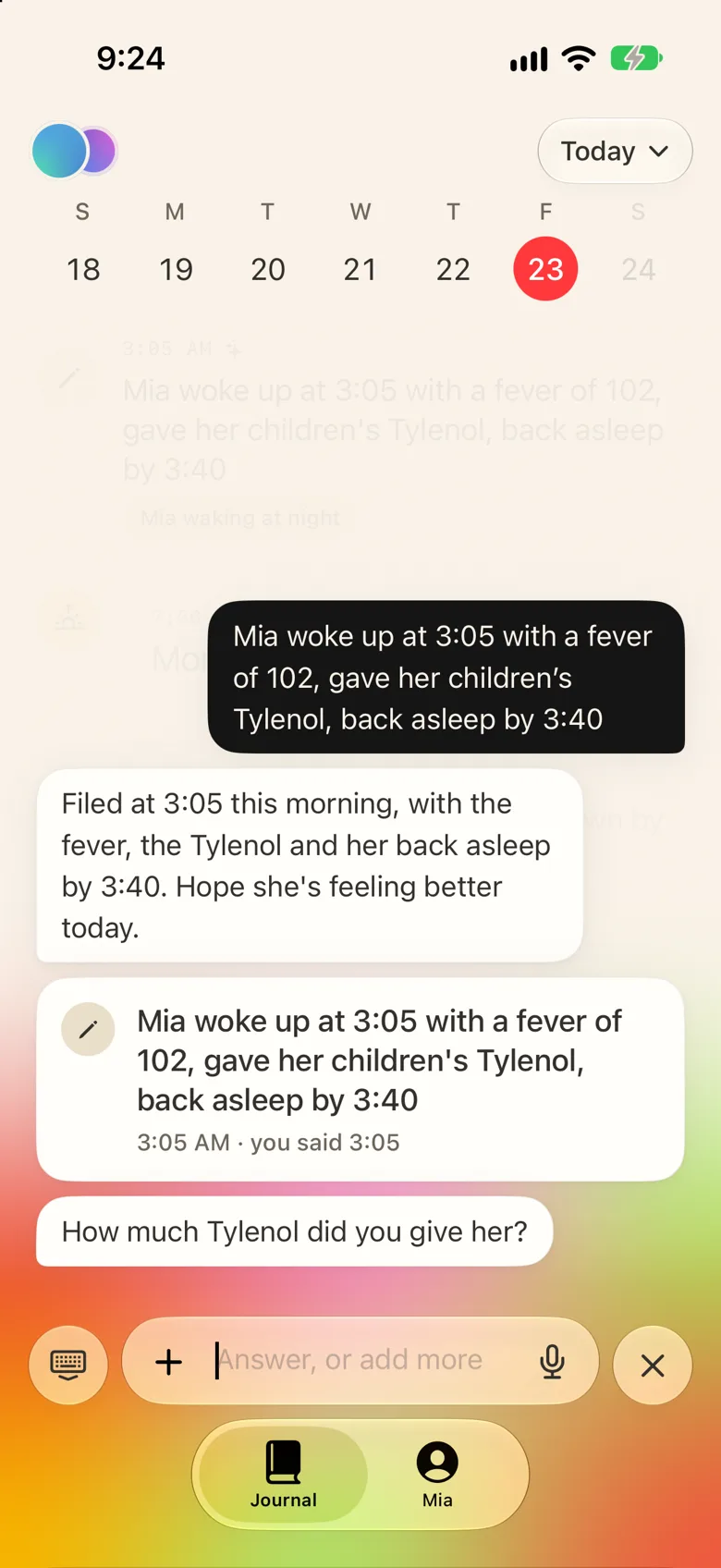
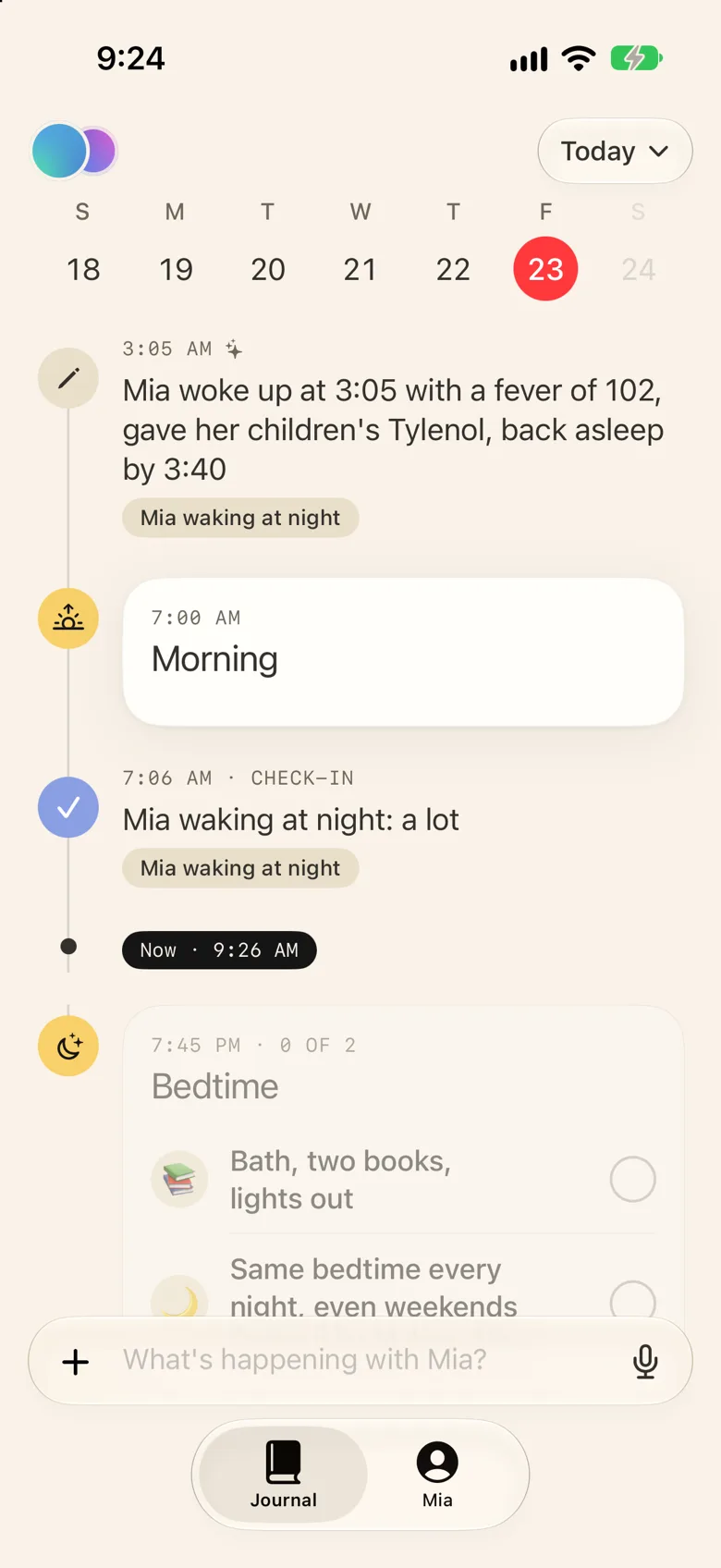
Each person on Mia's care team has a "For the next visit" list on their page, so the night waking and its dates can wait on the pediatrician's list until the appointment. The one page is still yours to write, and a stack of dated lines makes it quick.
This example is about the notes. If a child's fever worries you, call your pediatrician or nurse line that day.
Don't wait for the appointment if
Some symptoms need help before you finish any summary:
- Call 911 or go to an emergency room for severe difficulty breathing, severe stomach pain that came on suddenly, vomiting blood or something that looks like coffee grounds (NHS), or bleeding from your bottom that won't stop or is heavy, for example if the toilet water turns red or you see large clots (NHS).
- Get an urgent, same-day appointment or go to urgent care if your stool is black or dark red, or you have bloody diarrhea (NHS).
- See a doctor soon, rather than waiting for a routine visit, about other blood in your stool or weight loss you can't explain.
Questions people ask
What should I bring to a doctor's appointment?
A one-page summary of your main concern, a list of all medicines and supplements with doses (or the bottles themselves), any recent test results, and your questions written down with the most important first.
Should I make a list of symptoms for my doctor?
Yes. Writing your symptoms and questions down beforehand is standard advice from AHRQ and the NIA. Note when each symptom started, how often it happens, what makes it better or worse, and how it affects your day, and put the most important first.
How do I explain years of symptoms to a doctor?
Lead with the main concern in one line, then give a short timeline with dates, describe the pattern (how often, when, how long, better or worse), and list what you've already tried and how it went. Keep your detailed notes with you in case they want more.
Can ChatGPT summarize my medical history?
It can help organize long notes into a summary. Check the tool's privacy practices first, ask it to keep dates and short quotes from your notes next to each point, and check every line against your originals before you rely on it.
How long should a summary for my doctor be?
One page is a good target. It's enough to cover the main concern, what you've tried, and your questions, and short enough to read at the start of a visit.